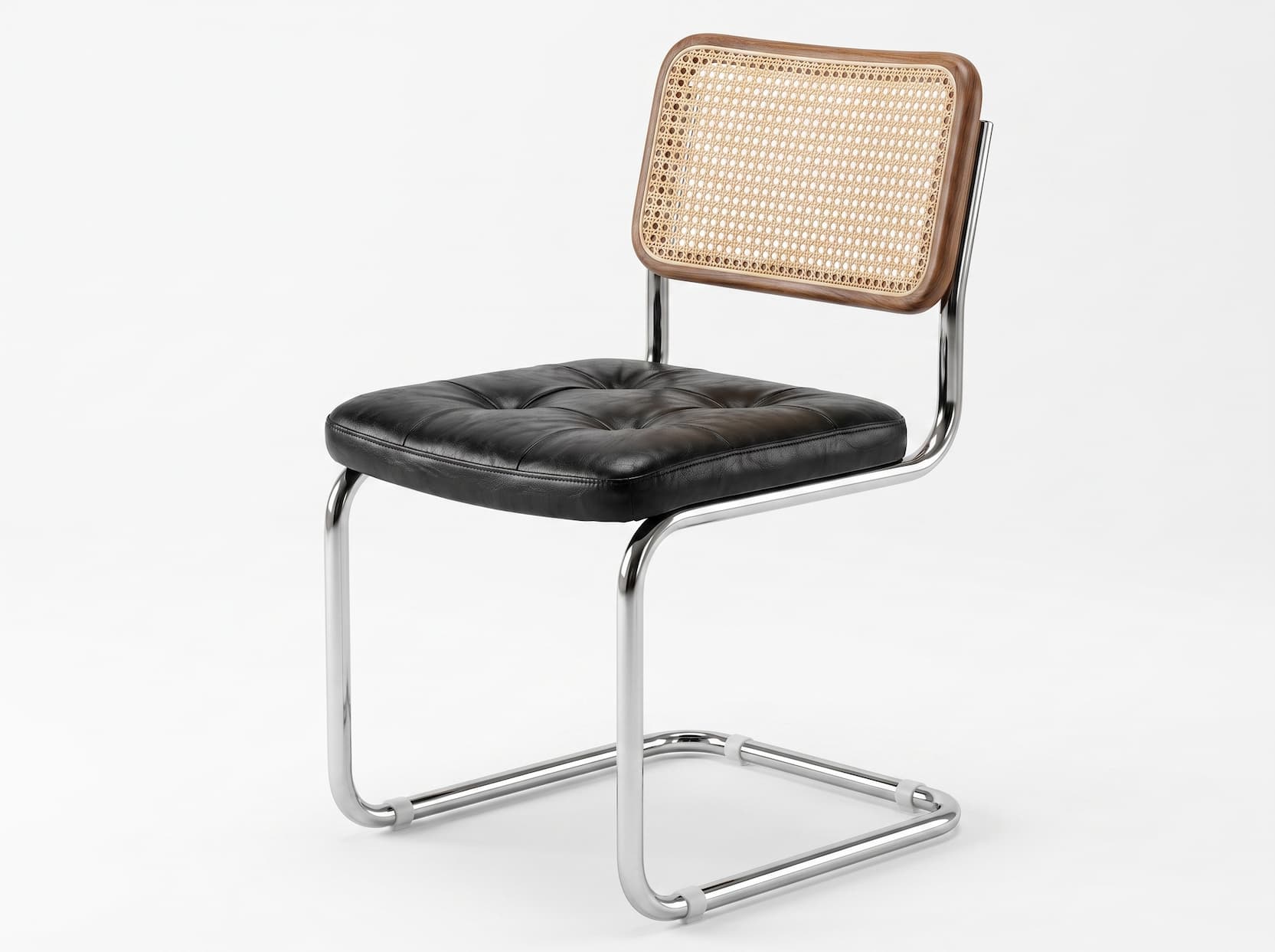
The History of Cesca Chair: How Marcel Breuer Blended Steel and Handwoven Cane
The Tube Was Cold, So They Wove It a Softer Skin
A Bicycle Handlebar Started All of This
Marcel Breuer arrived at the Bauhaus in Weimar in 1920, a 19-year-old dropout from the painting program at Vienna's Academy of Fine Arts. He rose quickly — by the mid-1920s he was head of the school's furniture workshop, and it was there, cycling through Dessau, that tubular steel caught his attention. The material was already trusted and mass-produced for something else entirely: bicycle frames. If steel tubing could be bent into a handlebar and hold a rider's weight, Breuer reasoned, it could hold a body seated in a chair.
That thinking produced the Wassily Chair in 1925 — the first tubular steel chair, named after Breuer's Bauhaus colleague Wassily Kandinsky. Three years later came a harder problem: could the tube bend into a single continuous line, with no back legs at all? The answer was the cantilever frame that would eventually carry the name Cesca.
Warmth in the Machine: Handwoven Cane Meets Steel
Once the frame existed, Breuer ran into a different problem. A chair made entirely of steel tubing felt like sitting inside a machine.
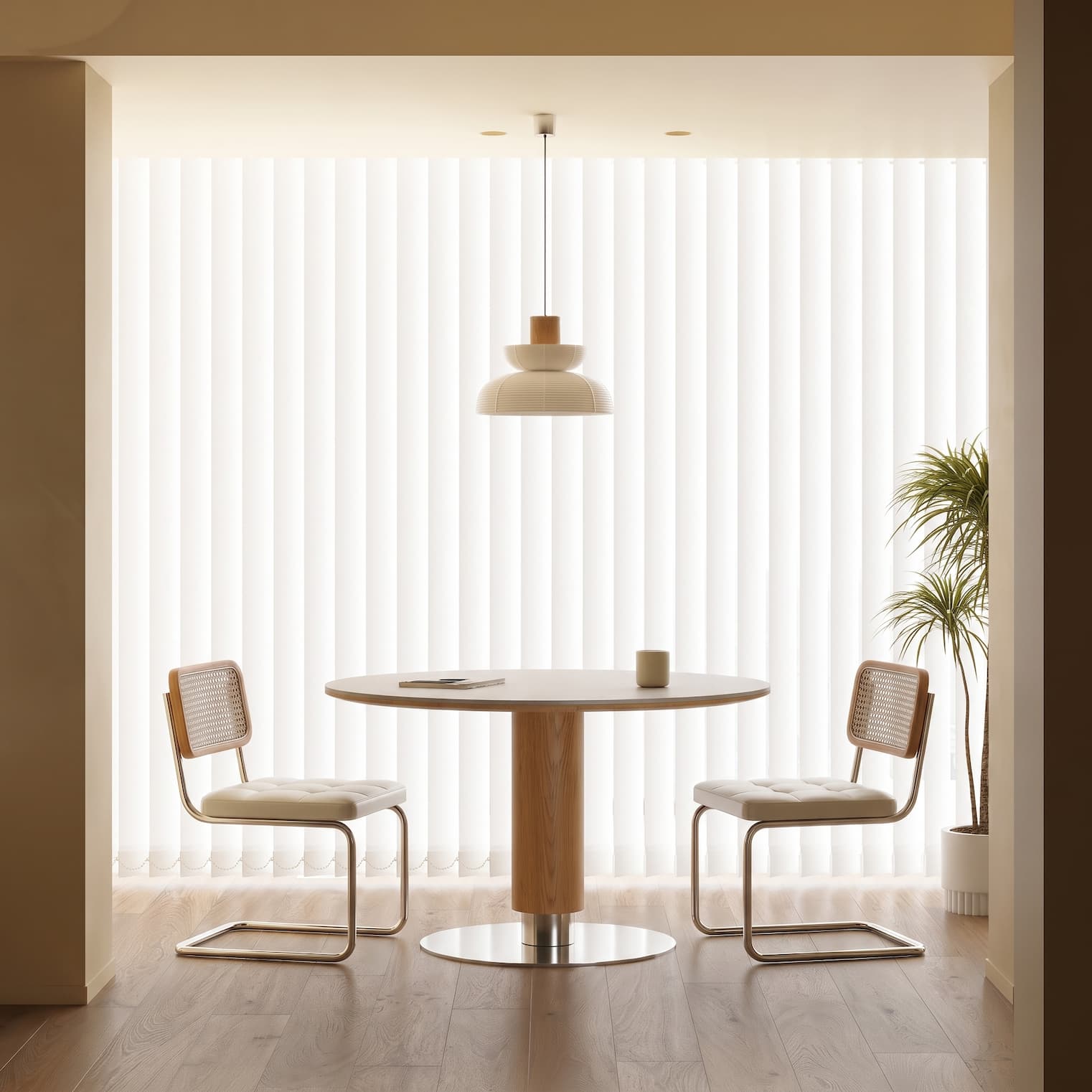
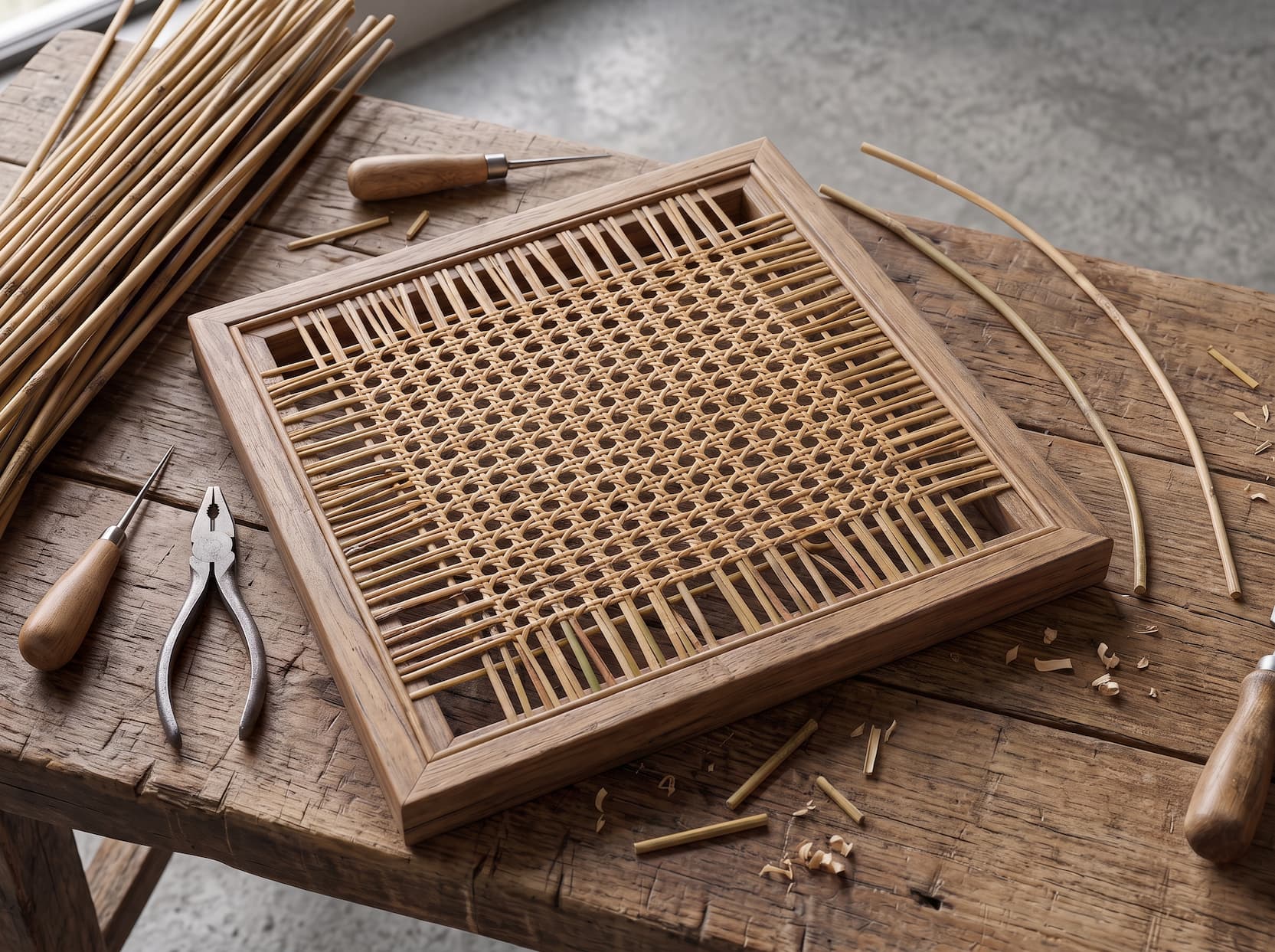
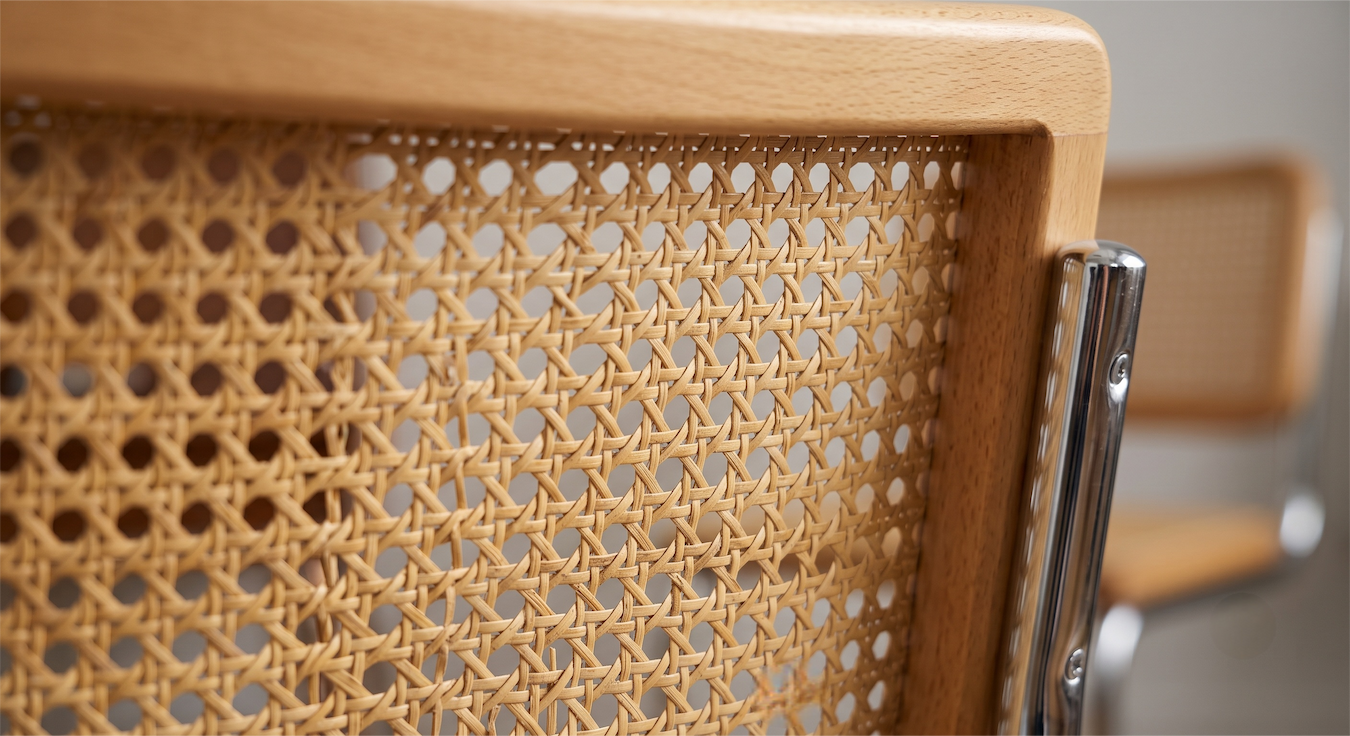
So he made a decision that bordered on heretical for the time: pair the most forward-looking structure in furniture with one of the oldest crafts there was — cane weaving, a technique already generations old in Central European chair-making. Whatever warmth the factory couldn't produce, the hand would supply. This is the real creed of the Bauhaus: not a rejection of craft, but a division of labor between industry and hand.
"Leave one place in a cold structure that can still be touched by hand."
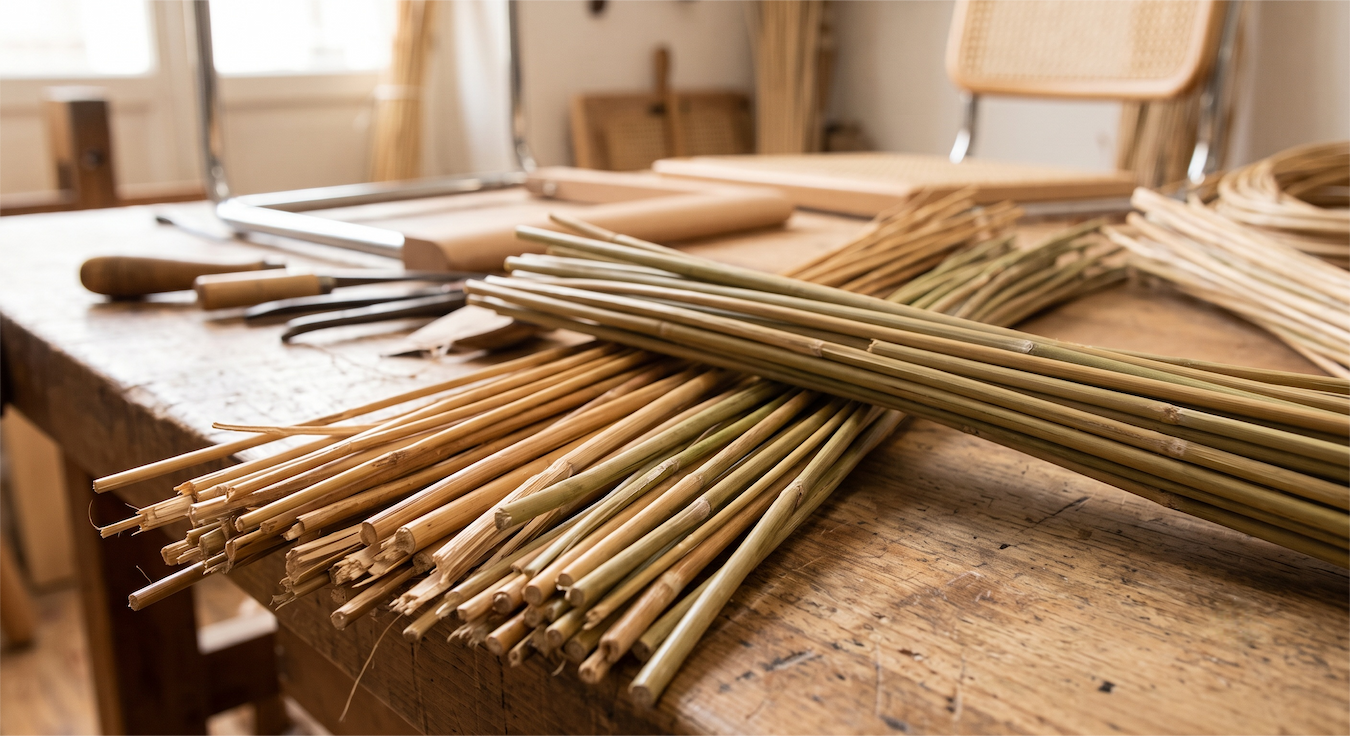
A closer look at cane before it becomes the seat you know:
The Chair Breuer Never Patented
The cantilever idea — a chair that seems to float, with no back legs — didn't belong to Breuer alone. In 1927, the Dutch architect Mart Stam showed his own cantilevered design at Mies van der Rohe's landmark "Die Wohnung" exhibition in Stuttgart, just ahead of Breuer's version reaching production. Breuer believed Stam had taken the idea from him; Thonet, the Austrian manufacturer producing both designs, ended up in the middle of a patent dispute that ran for years.
In 1932, the courts sided with Stam. The cantilever patent went to him, and for a period Thonet's catalogs reattributed the chair's structural concept accordingly. Breuer never patented his version at all — a decision that meant he received design royalties from Thonet but no exclusive claim on the frame itself. It's part of why close variations of this chair have circulated for nearly a century under different names, while the piece produced under license — the one now called Cesca — remains the one most directly tied back to Breuer's own workshop.
Cesca
In 1928 this chair had a factory name only: the B32. "Cesca" arrived decades later, when the Italian manufacturer Gavina began producing it and named it in tribute to Francesca, Breuer's young stepdaughter — a rare instance of a mass-produced object quietly carrying a family name long after its design was finished.